← The Fife and Drum / Spring 2021 (Vol 25, No 1)
↗ View this article in the original PDF newsletter
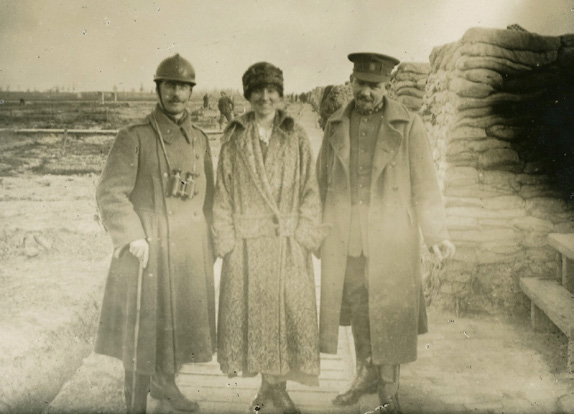
Dianne Graves has done it again. In the compelling In the Midst of Alarms: The Untold Story of Women and the War of 1812, Graves illuminated the forgotten role of women in the midst of that violent conflict. In her newest offering, In the Company of Sisters, she casts her gaze on the multilayered experiences of Canadian women in the war zone during the First World War. The result is a fascinating, brilliantly researched, and often poignant book that adds much to our understanding of the Great War.
Each November 11, in services across Canada, our war dead are commemorated, along with the service of our military men and women. Yet, as the famous words of John McCrae ring out and we especially recall the First World War, most people think of battlefields and the soldiers who fought on the front lines. Yet 30,000 Canadian women served overseas in various services between 1914 and 1919 and their names and stories are rarely mentioned.
These women faced physical danger and witnessed terrible suffering, all the while contributing to the well-being of the men at the front as well as those civilians living in the shadow of war. Some of the women themselves were wounded or became dangerously ill, and a small number lost their lives. In her book, Graves brings these women to life again, sharing story after story of courage, humour, and sacrifice.
As one might expect, In the Company of Sisters details the service of nurses serving with the Canadian Army Medical Corps. These women received the rank and salary of commissioned officers and, as such, were often envied by military nurses of other countries. Canada had a little over 3,000 professional nurses when the war began and there were a limited number of positions for nurses in the CAMC so many Canadians served in American, British, and French nursing corps.
Graves brings these women to life again
The nursing that they would do overseas, as Graves points out, would be far different from anything they would ever encounter in civilian nursing. They would minister to devastating wounds caused by bullets, shrapnel, flame throwers, machine guns and mines. They would treat meningitis, gastrointestinal complaints, the effects of poison gas, and complications such as hemorrhage, infection, and gangrene.
Graves provides many intimate snapshots of the personal experiences of these courageous Canadian medical workers. Nursing Sister Edith Hudson describes gas casualties: “There they lay… fully sensible, choking, suffocating, dying in horrible agonies. We did what we could but the best treatment for such cases had yet to be discovered, and we felt almost powerless.”
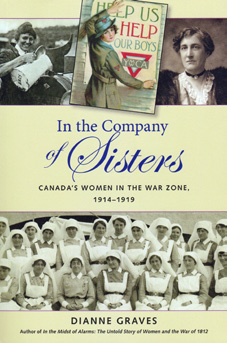
The working conditions of the nurses were appalling. In Lemnos it was baking hot, water supplies were often inadequate and flies were everywhere. Despite this, Nurse Katherine Wilson wrote “we were all young, earnest, unafraid, taking things in our stride.” In France, nurses faced muddy, cold weather and inadequate billets. They spent long hours caring for the wounded and assisting with surgery, sometimes during bombing raids.
Graves’ skill as a story teller and historian is especially clear in her in-depth portrayals of individuals such as 29-year-old Dorothy Cotton. Raised in a family with a strong military tradition, Cotton trained as a nurse in Quebec and at the outset of war was appointed to the Canadian Active Militia. Two younger brothers enlisted for overseas service in 1914, along with a brother in law—all three of whom would later die in the conflict. In late 1915, Cotton travelled to Russia and helped establish a military hospital there. She would witness the last days of the monarchy and the start of the Russian revolution. As the war progressed, she made trips back to Britain to mourn the loss of her brothers and comfort her mother and sisters.
working conditions of the nurses were appalling
While seven chapters chronicle the medical work carried out by Canadian women (six focus on the work of professional nurses, one explores the contributions of voluntary nurses), the remaining chapters raise up the unheralded work of non-medical volunteers. These include women who gave their time and effort to organizations catering to the comfort of soldiers as well as civilians directly affected by the war.
My favorite among these is Graves’ description of Mabel Adamson’s spearheading of the Belgian Canal Boat Fund. Adamson, who was married to a senior Canadian officer at the front, was deeply concerned about the situation of civilians living in the sliver of Belgium that had not fallen into enemy hands. Constantly bombarded, they had little access to food, medical necessities, clothing and other basics. Adamson and her supporters came up with the idea of buying a barge and distributing supplies to residents via the waterways that crossed the land. Though they often faced “entrenched male chauvinism” and the physical threat of German bombing and shelling, Adamson raised money and brought relief to many suffering Belgians.
The concluding section of In the Company of Sisters contains four chapters, each detailing the wartime life and work of a woman “with a mission.” They include Lady Drummond (who lost her only son during the war), singer and actress Lena Ashwell, peace activist Julia Wales, and artist Mary Riter Hamilton. These women rarely get even a passing mention in Canadian histories of the Great War. Yet they wielded tremendous influence on people both at home and the front lines.
Among her many accomplishments, Lady Drummond would found the Canadian Red Cross Information Bureau, providing news to families at home and soldiers in hospital, “tracing troops missing in action, maintaining files on Canadian prisoners of war…arranging volunteer visitors for convalescent Canadian soldiers in Britain, and informing families in Canada about the status and condition of their wounded, sick, missing, or captured loved ones.”
Ashwell, a prominent actress, theatre manager and suffragist, would become the first woman to arrange large-scale entertainment for serving troops during the First World War. Her “concerts at the front” scheme not only provided employment for entertainers during the war, it brought much needed comfort and enjoyment to war-weary troops. In one performance at a chalk pit near Le Havre, singer Ivor Novello would sing “Keep the Home Fires Burning” and Ashwell would watch as troops joined in with gusto and called for more.
After the war, artist Mary Riter Hamilton was commissioned by the Amputation Club of British Columbia to go to the battlefields and paint “that portion of the front line in France held by the Canadian Corps.” It took a prodigious effort on her part, but Hamilton created an impressive body of work that speaks clearly about the terrible experiences of the men who fought and the devastation the war created.
No book about women and war would be complete without a chapter on pacifism and Graves does not disappoint. There was a significant international movement for peace during the Great War and the women who championed it were often vilified. Grace Wales, a Canadian academic, supported the Women’s Peace Party in the United States, a feminist and pacifist organization. She developed the Wisconsin Plan, a proposal to convene a conference of representatives from around the world committed to finding a peaceful solution to the war. She attended the International Congress of Women at the Hague in 1915, where her proposal was adopted by the delegates. While Wales did not succeed in her goal of ending the war by peaceful means, she would work for peace for the rest of her life.
If there is anything negative to be said about In the Company of Sisters: Canada’s Women in the war Zone, 1914-1919, it would be that it ends too soon and that every profile almost deserves a book of its own. Graves has made a significant contribution to our understanding of the Great War, and this book should be on the shelf of anyone who wants to have a deeper understanding of the experience of Canadians in that long-ago conflict.
Original printed pages